Address
Tulelake California
Work Hours
Monday to Friday: 7AM - 7PM
Weekend: 10AM - 5PM
Persian Kittens – Bringing Tiny Tails, Big Hearts, and Endless Joy Right to Your Doorstep!
Persian kittens have a fascinating heritage dating back over four centuries to the region of Persia, now modern day Iran. Historical records and travelers’ writings from the 1600s describe long-haired cats with luxurious coats and serene temperaments living among Persian royalty, where they were treasured as symbols of elegance and nobility. These early Persian cats were likely descendants of indigenous long-haired cats selectively bred for their striking appearance and gentle nature.
The breed’s journey to the Western world began in the 19th century when Persian cats were imported into Europe, particularly England and France. Breeders in the Victorian era refined their distinct physical traits most notably their flat, “pansy-like” faces, large round eyes, and thick, plush coats through careful selective breeding. This process established the recognizable Persian features admired today. The breed quickly gained prominence in cat shows and became a symbol of luxury and sophisticated companionship.
Genetic influences from other long-haired breeds, such as the Angora from Turkey and possibly early Himalayan stock, contributed to the Persian’s development, resulting in their wide variety of coat colors and patterns. Over time, Persian cats have maintained their reputation as calm and affectionate pets, prized for their quiet dignity and ability to bond closely with their owners.
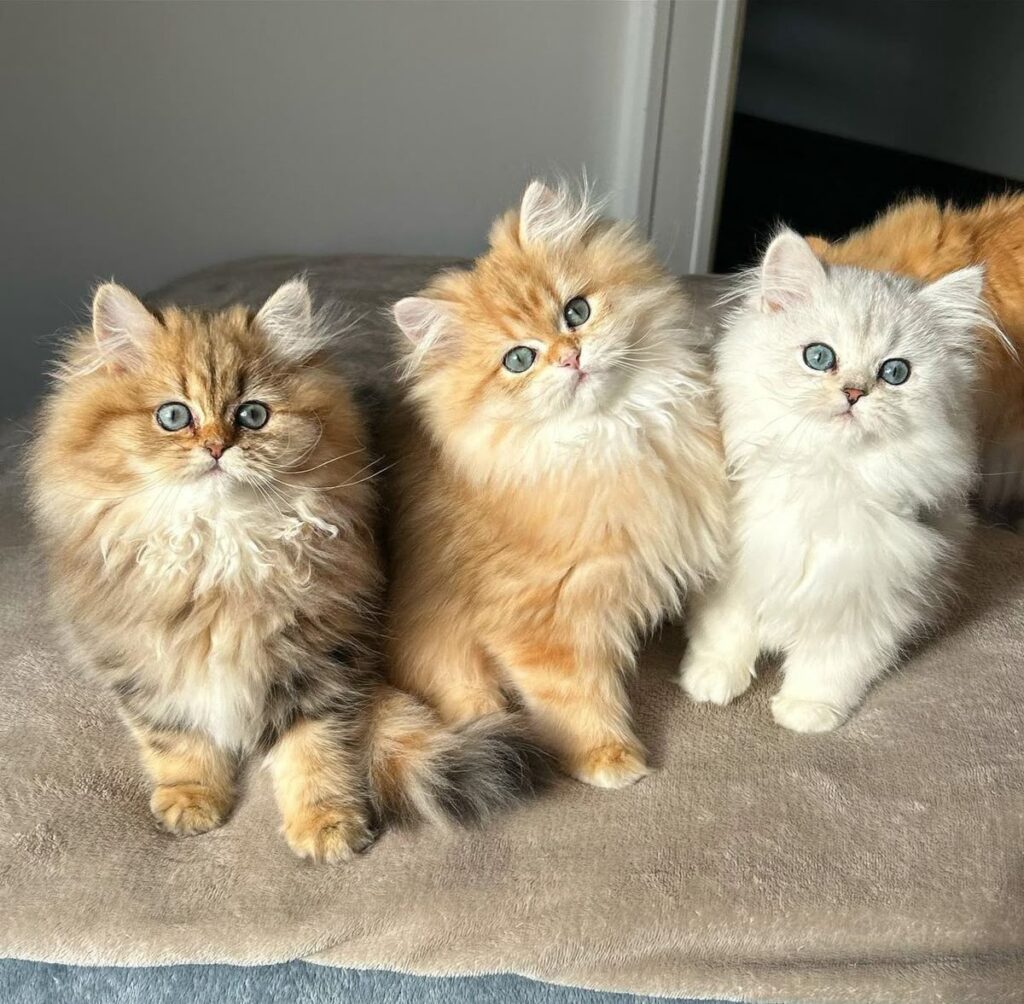
From birth, Persian kittens are notable for their soft, dense fur that grows into a magnificent, flowing coat. Their signature physical traits include a broad, rounded head, snub nose, full cheeks, and large, captivating eyes that come in various shades like copper, blue, or green depending on the coat color. Their medium-sized, sturdy bodies are supported by short legs and a fluffy, plume-like tail that complements their regal posture. Persian fur colors range from classic solids like white, black, and blue to exotic patterns such as tortoiseshell, calico, and Himalayan point coloration.
Persian kittens embody calmness and affection, often described as “lap cats” because of their love for close, gentle human contact. They prefer tranquil environments and thrive in homes where stress and loud noises are minimal. Unlike more energetic breeds, Persians are content to lounge and observe, offering quiet companionship rather than boisterous play. Their affectionate nature makes them highly loyal, often forming strong bonds with family members and showing a docile, patient demeanor with children and other pets.
Owning a Persian kitten involves a commitment to daily grooming, essential to prevent tangles and mats in their luxurious coat. This grooming routine includes gentle brushing and occasional bathing. Because of their characteristic flat faces, Persian kittens may experience tear staining and require regular eye cleaning to maintain hygiene. Additionally, breed-specific health monitoring is important; Persians are predisposed to respiratory challenges due to their brachycephalic structure, as well as potential kidney and heart conditions. Maintaining a balanced diet, hydration, and routine veterinary check-ups are vital to their wellbeing.
Persian kittens hold a timeless appeal that continues to captivate cat lovers worldwide. Revered both in show rings and as adoring pets, Persians are widely regarded as an icon of feline beauty and grace. They remain one of the most sought-after breeds for people who desire a serene yet devoted companion. Their status as a classical breed with deep cultural roots makes Persian kittens not just pets but living heritage bringing a touch of history, style, and tranquility into modern homes.